Application screening
Review cabinet type, drawer weight, opening angle, finish, mounting surface and the expected usage cycle before selecting the fitting family.
Service structure
Hettich service work starts with the cabinet use case: drawer load, door overlay, installation sequence, finish expectation and the maintenance window after the furniture is in service.
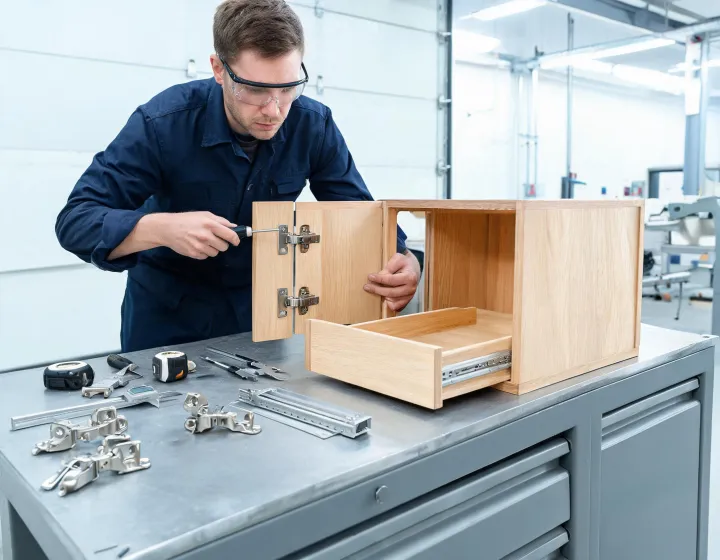
Four service blocks
Each block is intentionally narrow, so the buying team can move from requirement to quote without mixing product selection, documentation and service routing into one vague request.
Alternating case highlights
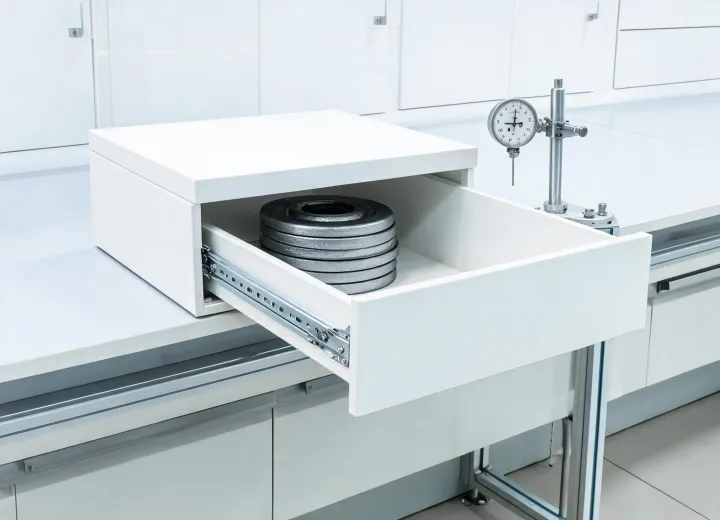
An OEM cabinet range needed one runner approach across shallow office drawers and deeper utility drawers. The service step separated load class, extension behavior and drawer box tolerances, then converted the result into a short comparison table for purchasing and production. That prevented a late-stage change from being treated as a new product search.
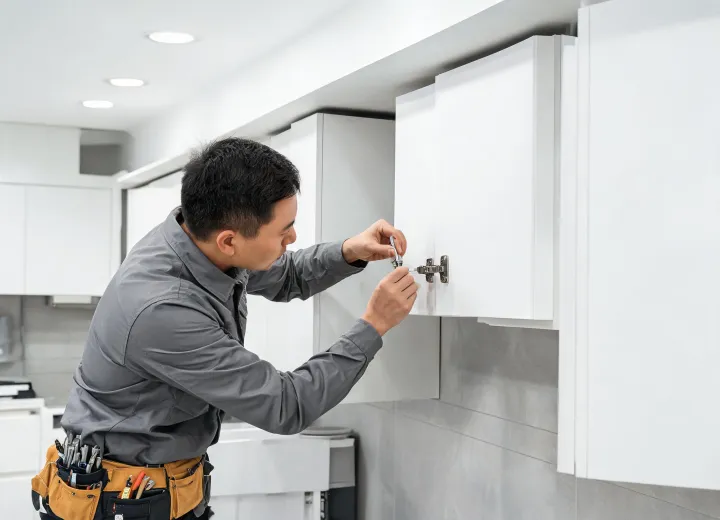
A fixture contractor had several door sizes but only a short installation window. Hettich support focused on cup position, overlay, baseplate pairing and adjustment range, then produced a simple jobsite checklist. The team could train installers around repeatable movement rather than asking each crew to interpret catalog pages independently.
Service request
Attach the cabinet use case, target quantity, hardware family or replacement reference. Hettich can respond with a selection path, not just a catalog link.